Folding Bike Size Guide for Different Riders
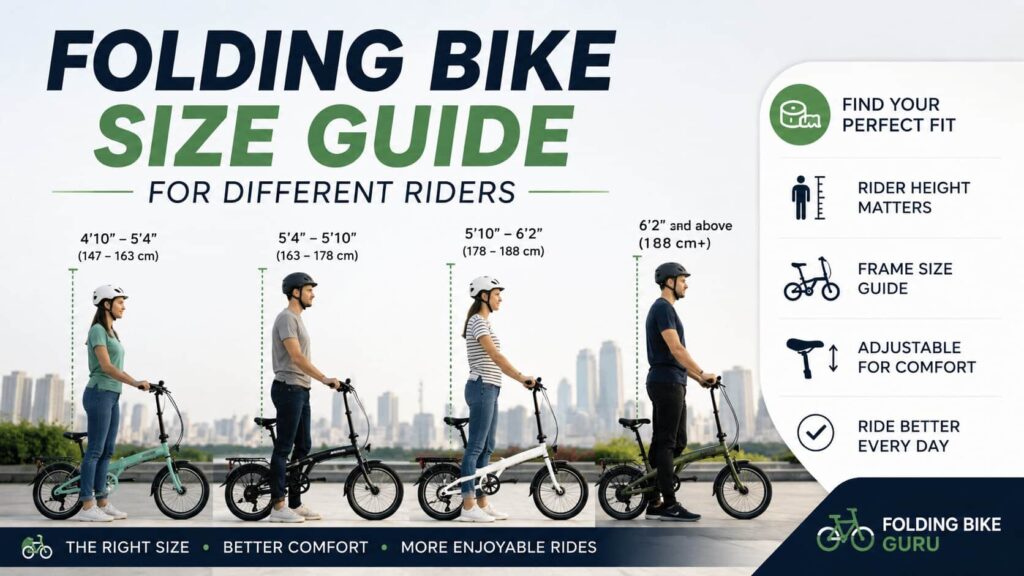
For optimal comfort, selecting the perfect dimensions is paramount, especially for compact designs. Look for models with adjustable seat heights, which accommodate a range of leg lengths. A minimum range of 30 to 40 cm from the top tube to the ground ensures adequate space for a comfortable ride.
Handlebar height also plays a significant role in achieving a proper fit. Aim for handlebars that allow the rider’s arms to extend naturally without straining. Brands often recommend a height adjustment within the range of 95 to 115 cm from the ground, which benefits various riding styles and postures.
When considering wheel diameter, a typical range falls between 16 to 20 inches, influencing the ride’s speed and handling. Smaller wheels are easier to maneuver and offer portability, promoting an enjoyable experience in tight urban spaces.
Lastly, various frame sizes cater to diverse body types. A quick reference: S frames suit heights around 140-160 cm, M frames fit 160-180 cm, while L frames are ideal for those over 180 cm. Make sure to assess your personal measurements to achieve the best alignment.
Choosing the Right Frame Size Based on Your Height
To ensure optimal comfort and performance, individuals measuring between 4’10” to 5’2″ should typically opt for a frame that fits the 12″-14″ range. This smaller structure enhances control and stability, making it ideal for leisurely rides.
Riders with a height of 5’3″ to 5’8″ generally find a frame measuring 14″-16″ provides the best fit. This size strikes a balance between agility and ease of handling, suitable for both daily commuting and casual excursions.
- Height 5’9″ to 6’0″: choose 16″-18″ frames.
- Height 6’1″ to 6’3″: consider 18″-20″ options.
Individuals over 6’3″ should explore frames exceeding 20″ to accommodate their stature comfortably. Selecting the appropriate structure fosters an enjoyable ride experience and promotes good posture while cycling.
Adjusting Seat and Handlebar Heights for Optimal Comfort
For maximum comfort, set the seat height so that your leg has a slight bend at the knee when the pedal is at its lowest point. This ensures efficient pedaling without straining your knees. A useful method is to sit on the saddle and measure the distance from your hip to the pedal. Ideally, this distance should match the length of your femur, allowing for a natural range of motion.
Handlebar height should be adjusted to allow for a relaxed posture, with elbows slightly bent and wrists in a neutral position. A rule of thumb is that the handlebars should generally be at or above saddle height for a more upright riding stance, ideal for comfort. If you prefer a sportier feel, setting them lower can improve aerodynamics, but remember to maintain comfort and control.
Weight Considerations and Their Impact on Folding Bike Size
For optimal comfort and performance, prioritize choosing a model that supports your weight. Riders over 200 pounds should look for units with a higher weight limit, typically around 300 pounds. It’s advisable to validate the manufacturer’s specifications before making a selection. Choosing a frame designed for heavier loads can also enhance durability and stability.
A significant factor affecting the foldable unit’s ergonomics is rider height. For those under 5’4″, a smaller frame will provide a better fit, ensuring appropriate leg extension and comfort. Taller individuals, particularly over 6 feet, benefit from adjustable seat posts and handlebar heights on larger models. This customization is essential for a pleasant riding experience, reducing strain on the back and legs.
| Weight Limit (lbs) | Recommended Frame Size |
|---|---|
| Up to 200 | Small |
| 200 – 250 | Medium |
| 250 – 300 | Large |